But when I look again at Apple, I still think a great CEO may be irreplaceable.
Tim Cook has been extraordinary. He has taken Apple’s revenue and market capitalization to such heights that his operating ability must be among the best in the world.
Yet I still feel that, if Apple cannot find another CEO like Jobs to succeed Cook in the next few years, it could easily begin to decline. I would not even be particularly surprised if it suddenly collapsed one day.
Apple is precisely the example that can push our model of mature countries and mature companies one step further.
Tim Cook is not a mediocre CEO. He is an exceptionally good CEO for a company in its mature phase. His excellence simply lies in a very different dimension from Steve Jobs’s.
Jobs’s most formidable ability was repeatedly answering the question, ‘What is the next world?’
With the Mac, iPod, iTunes, iPhone, and iPad, he was not improving an existing business by twenty percent. Every few years, he redefined what kind of company Apple was.
Cook’s greatest strength has been turning the product company Jobs left behind into one of the most powerful commercial machines in history. Its supply chain, global manufacturing, services revenue, subscriptions, Apple Silicon, capital returns, ecosystem, retail, and operating efficiency are all remarkable achievements.
In the terms of our model, Jobs made the company jump a level. Cook made it improve a little every year, and kept doing so for more than a decade.
Compounded for more than a decade, that ‘little’ is itself extraordinary.
But your concern is reasonable. The real question is not whether Apple can sell iPhones next year, but whether its ability to jump another level is fading.
Apple Watch, AirPods, and Apple Silicon are all major successes, so it would be unfair to claim that Apple stopped innovating under Cook. But if the standard is the creation of a platform that did not previously exist and later changed the entire computing paradigm, Apple has indeed not done that again for a long time.
Vision Pro is ambitious, but it has not become the next iPhone. The car project was cancelled after years of investment. Apple did not create the generative-AI wave either.
The iPhone is an enormously tall tree. Once a tree becomes that large, every rational daily decision inside the company begins with one instruction: do not harm the iPhone.
What if the next computing platform weakens the App Store? What if AI agents mean users no longer open dozens of apps? What if human-computer interaction no longer revolves around taking out a phone and tapping an app?
It is extremely difficult for a company earning enormous profits from its existing ecosystem to destroy its own business model. Jobs’s rare ability was precisely his willingness to kill his own products. When the iPhone appeared, he knew it would kill the iPod.
Apple could certainly decline slowly without another Jobs, but I would assign a lower probability to a sudden collapse. Apple’s user base, brand, supply chain, cash flow, developer ecosystem, chip capabilities, and customer loyalty are all very deep.
It is more likely to gradually become like the old IBM, Microsoft in the 2000s, or Intel during one part of its history: still enormous, profitable, and excellent, while more and more of what determines the future happens elsewhere. Only when people look back ten years later do they realize that the turning point had already passed.
Microsoft provides a beautiful counterexample.
After the Ballmer era, Satya Nadella took over, redefined the company’s strategy, pushed Azure, cloud computing, open source, and subscriptions, and then moved into artificial intelligence. He forced a mature company that had once seemed tired to jump another level.
Microsoft genuinely completed such a cycle: it avoided killing the company, sustained and accumulated capability over time, and then, when an outstanding CEO appeared, jumped to the next level.
Apple’s most important question is therefore not only who will succeed Tim Cook, but whether Apple’s organizational structure can still identify and truly empower the next Jobs- or Nadella-like person.
The greatest danger in a mature, large organization is often not the absence of genius. It is that, when genius appears, middle management, the board, financial discipline, existing profit centres, risk controls, and internal politics all say, ‘This idea is too risky. It will hurt the very successful business we have today.’ The organization then filters that person out.
This returns us to the same question we faced in national governance: how can a mature organization obtain both the floor provided by institutions and the ceiling provided by genius?
A floor without a ceiling leads to gradual bureaucratization. A ceiling without a floor can soar under Jobs and crash under a madman.
A truly formidable organization can survive without depending on Jobs, yet still hand him the steering wheel when he appears.
From governing states to governing companies
Here the dialogue turns to Apple: the irreplaceability of a great founder, and whether a mature organization can keep moving without one.
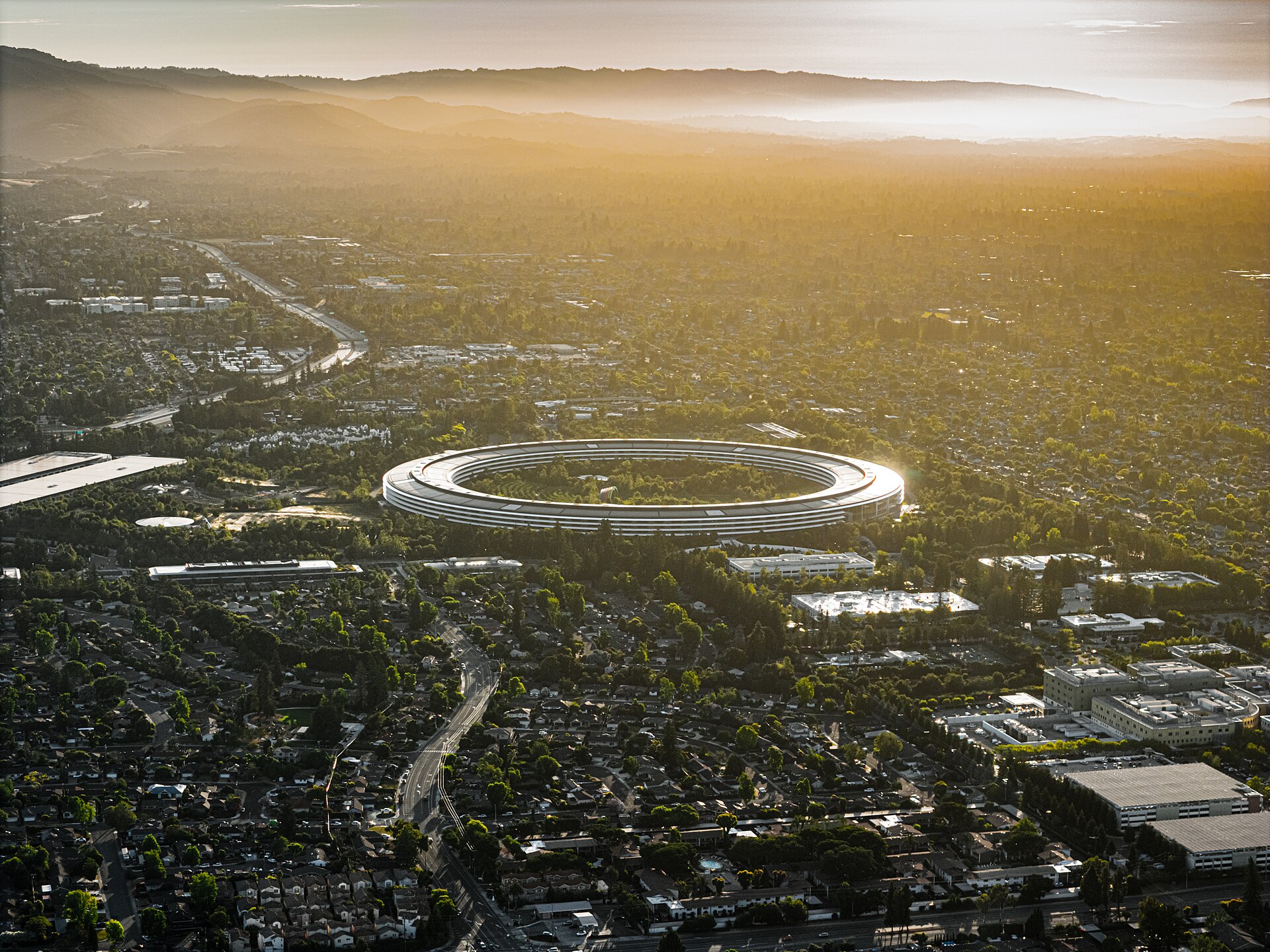
Looking back, we have really been discussing the same thing all evening.
Why BGC could be planned, why the Philippines finds it so difficult to reproduce that kind of state capacity, how the Chinese Communist Party learned from the disasters of the Mao era, why reform and opening produced pragmatism, how Xi increased execution capacity while also creating risks in succession and the feedback loop, and finally how we arrived at the United States, Britain, Germany, Japan, Switzerland, Apple, and Microsoft.
They all ask the same question: how can an organization avoid being destroyed by a bad leader without locking out a genuinely outstanding one?
That is why these remain my three favourite lines:
Do not kill the company.
Improve a little every year.
Occasionally, when an outstanding CEO appears, jump to the next level.
Exactly.
A mature institution cannot guarantee that great leaders appear on schedule, nor should it place all its hopes in the next arrival of genius.
What it can do is let ordinary leaders preserve what has been built, let outstanding leaders open the ceiling, and prevent bad leaders from destroying the load-bearing structure.
If we compress everything we discussed tonight into one objective for organizational governance, perhaps it is this:
Let the mediocre preserve, the capable advance, and the bad be constrained.