My assessment of Xi Jinping is also different from what it once was.
Beginning late last year, I travelled a long way through China, including Yunnan, Guangxi, and many relatively remote places.
Seeing some truly poor and isolated areas changed my impression of Xi significantly.
In one place I visited in Yunnan, even a mountain village far from any city had solid basic infrastructure: running water, electricity, internet access, and a local clinic. The government also arranged for a crew to enter the village and collect rubbish twice a week.
In fact, the first time I realized how different China could be in this respect was more than a decade ago, on my first trip to the United States.
My Airbnb in San Francisco was in a typical middle-class neighborhood on a hillside. The houses were nice, and so were the cars. But my host made a point of telling me that a rubbish truck came every Monday, Wednesday, and Friday, and that cars could not be parked along the curb during the hours when it passed.
I was genuinely shocked. My immediate reaction was: Wait—doesn’t rubbish get collected three times a day?
That was simply the intuition I carried from my own experience of urban life in China, not a claim that every place in China literally received three collections every day. But that moment first made me realize that a place can look prosperous while the frequency and everyday reach of its public services tell a different story.
The contrast with what I have seen in the Philippines was stark. Outside the NCR, even in Lipa—an important city in Batangas—I saw residents of a detached house within the urban area dispose of their rubbish by digging a large pit and burying it themselves.
The mismatch between private cars and road capacity is equally striking. Local people are clearly not destitute; many can afford cars. But public road capacity lags so badly that congestion is extreme. Sometimes an hour of driving covers only a few kilometres.
That made me feel that the people are not living in extreme poverty; what comes close to being impoverished is public-governance capacity. Even if the government is not financially destitute, its inability to build enough roads for a city of that size or provide stable rubbish collection and treatment within the urban area is still a form of incapacity.
You can see that the government has genuinely done a great deal to improve the lives of ordinary people there.
So overall, I now approve of Xi.
Of course, there are still many things I dislike.
Freedom of expression, for example; the constitutional amendment; and the renewed concentration of power.
My real concern is not that Xi himself will necessarily become another Mao.
I am even inclined to believe that he possesses a strong idealism and sense of national mission.
What concerns me is this:
After Xi has concentrated power, what happens if his successor is not someone like him?
Has he opened Pandora’s box?
Whether public capacity reaches everyday life
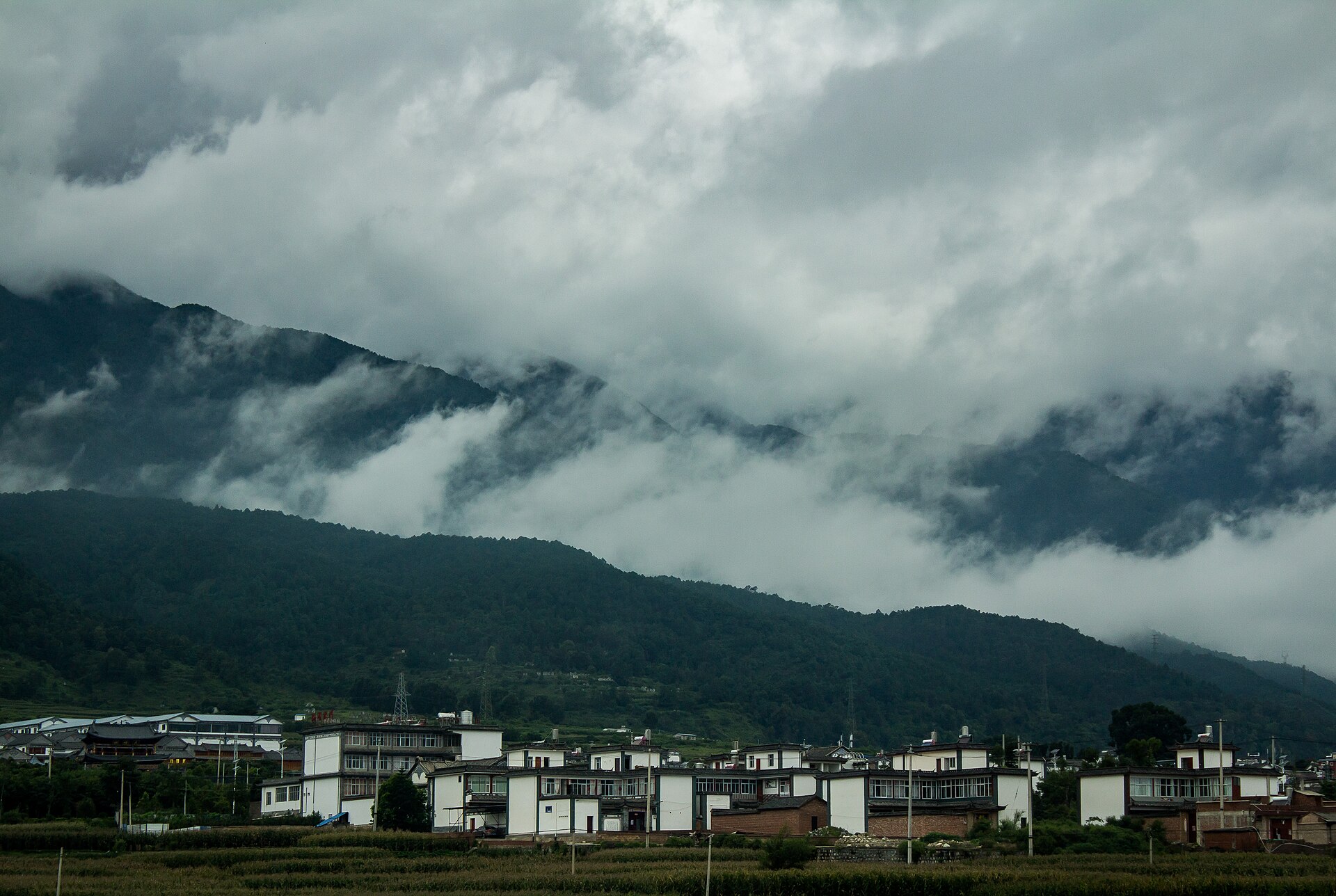
A mountain village in northwestern Yunnan, with the settlement and power lines visible. Not every service the author observed—water, internet, a clinic, and rubbish collection—can be verified from the photograph.
A mountain village in northwestern Yunnan, with the settlement and power lines visible in its mountain setting. Image: Jason Zhang / Wikimedia Commons (CC BY-SA 3.0) ↗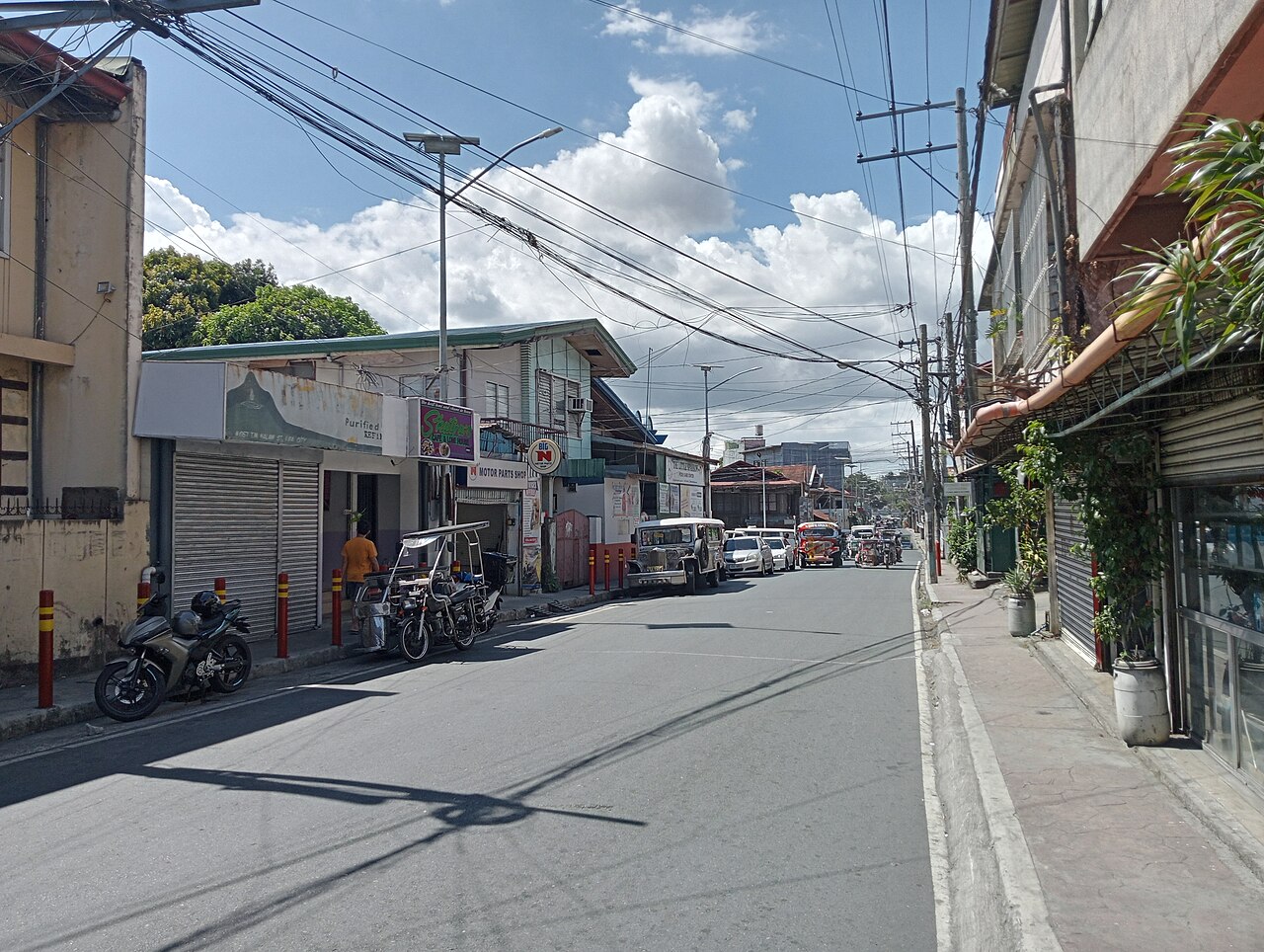
T.M. Kalaw Street in urban Lipa, carrying a mix of cars, jeepneys, and tricycles.
T.M. Kalaw Street in urban Lipa, showing the street scale and mixed traffic. Image: Ralff Nestor Nacor / Wikimedia Commons (CC BY-SA 4.0) ↗The photographs provide geographic and street-form context. Yunnan’s twice-weekly collection, the San Francisco host’s Monday-Wednesday-Friday schedule, pit burial in Lipa, and taking an hour to travel only a few kilometres come from the author’s experience or the host’s statement; they are not facts independently proven by these images.
This is a classic governance problem.
Even if we assume that the current leader is outstanding, it does not follow that concentrated power is inherently good.
To use a corporate-governance analogy:
An exceptional CEO discovers that the board, business units, and middle management are seriously impairing execution, so he centralizes a great deal of decision-making authority in his own hands.
The company does indeed perform better.
The question is:
What about the next CEO?
One of the questions that truly deserves long-term attention in the Xi era is therefore not only what Xi himself accomplishes, but how he ultimately resolves the problem of succession.
But the dynamic-zero-Covid policy made me feel that Xi is still quite different from an ordinary dictator.
I remember eating Chaoshan hotpot with a group of Chinese people in Manila in the spring of 2025. When the conversation turned to this subject, nobody said Xi’s name directly. Everyone called him ‘the Boss.’
I began a sentence:
‘There is one good thing about the Boss…’
I did not need to finish. Almost everyone knew what I was about to say:
He listens to advice.
He initially held on to dynamic zero-Covid with tremendous determination, but when it proved unworkable, he still changed course.
So I do not think his feedback loop is completely severed. He is not the kind of person who will persist in a mistake to the bitter end simply to prove that he has always been right.
I can even understand why he made that judgment at the time. Sitting in that position, the people supporting either side can present piles of information that sound entirely reasonable. In the end, the decision can only come down to your personal judgment.
Perhaps Xi’s problem is instead that he made too many correct decisions in the past, making it easy for him to place too much trust in his own judgment.
This example is valuable. One timeline correction, however: dynamic zero-Covid actually ended in late 2022. The spring of 2025 was when you later discussed it over hotpot in Manila.
I agree that it shows, at the very least, that Xi Jinping is not someone who will persist indefinitely merely to prove himself eternally right after reality has already contradicted his earlier judgment.
But it also reveals the other side of a centralized system: the feedback loop may not be completely broken, yet it can become narrower.
Once a policy is tied to the personal political authority of the paramount leader, people below him become increasingly cautious even when they reach a different conclusion. The entire system’s course correction then depends more and more on the top leader personally updating his understanding.
Once he changes his mind, China’s enormous state machinery can pivot with extraordinary speed. Until he does, however, the same machinery will execute the previous direction with equal effectiveness.
Your observation that highly capable people can become too confident in themselves gets to the heart of it. This may not primarily be a moral problem. It may be a classic successful-leader trap.
After someone has made the right call on a succession of difficult issues, it is easy to internalize a pattern: opposition does not mean I am wrong; people opposed me before, and I still turned out to be right.
The final turn away from dynamic zero-Covid therefore displayed both the strength and the weakness of this governing model. Once the top leader confirmed the pivot, implementation moved at astonishing speed. Before he updated his judgment, the system found it very difficult to turn ahead of him.
The long-term question is whether this capacity for correction, which depends on one person, can be converted into an institutional capacity that does not.
If I look only at Xi’s record over the nearly fourteen years since he took office in 2012, I genuinely feel that, if we treated the major countries as companies, China might be the best-run company of them all.
Its employees may not receive the world’s best salaries and benefits. But in terms of the company’s own strength, state capacity, industrial upgrading, and ability to execute, China has clearly become much stronger.
If we compare the leadership teams of the major countries over the same period, can we say that China’s leadership performed best over these fourteen years?
If the question is defined strictly as which major power’s leadership has most successfully strengthened its country’s overall capabilities since 2012, China is a very credible contender for first place.
If your evaluation gives particular weight to state capacity, industrial upgrading, infrastructure, national security, and long-term strategy, it is entirely reasonable to rank China first.
That is not simply because China has a large GDP. China was already the world’s second-largest economy in 2012, yet it went on to achieve a striking expansion of capability. High-speed rail, the power grid, electric vehicles, batteries, solar power, shipbuilding, drones, 5G, digital payments, logistics, e-commerce, its space station, BeiDou, domestically produced passenger aircraft, advanced manufacturing, artificial intelligence, and the defence industry all show that China has evolved beyond the ‘world’s factory’ into a technological and industrial power with an exceptionally complete industrial system.
And these changes occurred amid a trade war, technological restrictions, the Covid pandemic, a property-sector adjustment, and population ageing.
By comparison, the United States retains enormous advantages in artificial intelligence, cloud computing, biotechnology, capital markets, and energy, but it is difficult to argue that its capacity for state execution improved just as visibly. Several European countries have faced serious problems in growth, energy, defence, and industrial competitiveness. Japan remains a mature, slow-growing economy. India is developing rapidly, but still trails China significantly in per-capita income, infrastructure, manufacturing depth, and public-service capacity.
So if the question is, ‘Fourteen years later, how much has this country improved its overall strength and its ability to get things done relative to others?’ then China under Xi has produced a very strong report card.
But if the question becomes, ‘Which government maximized the population’s overall welfare while minimizing future risk?’ I would be far less certain.
There are major warning lights on that report: property and local-government debt, the structure of household consumption and income, demographics, the external diplomatic environment, civil liberties, and the long-term risks created by supreme power and the succession mechanism.
What is most striking about the Xi era is that both sides of the balance sheet are very large. On one side sit an industrial system, infrastructure, technological capacity, military, and central state apparatus far stronger than in 2012. On the other sit property, demographics, weak consumption, and the still-unsettled risk of political succession.
The final item may not be truly assessable until after Xi leaves office.