If I evaluate countries as companies, I still think China is the best-run company. Its employees may not receive the best pay and benefits, of course.
It may also be that I personally developed fairly quickly during these fourteen years, so I do not feel the pressure experienced by people who were less successful as readily. I acknowledge that bias.
But in my own life, my sense of well-being has genuinely risen a great deal.
Consumption is the most obvious example. I am not simply comparing China today with China in the past. Compared horizontally with every developed country I have visited, China still offers a greater variety of goods—and the difference is even more pronounced when compared with countries in the developing world.
Beijing is a typical northern city, yet even in winter its supermarket shelves often carry a wider range of tropical fruit than I have seen in some tropical countries. There may be several times as many varieties, often at only a fraction of the price.
Things are now so cheap that I worry whether this is the result of excess productive capacity and may actually be harmful to producers.
But I do not think this is a problem that can be solved simply by choosing capitalism, socialism, or one particular path. It may be a deeper contradiction within the modern economic system itself.
The environmental improvement is also especially visible.
I lived for many years around Wudaokou in Beijing. A lot of the water nearby used to be little more than foul drainage ditches. Now the water is clearer, there are more parks, and the entire residential environment is far better than it was a decade ago.
Government service is similar. More than ten years ago, while processing a property transfer in Beijing, I was driven mad by the staff at the tax counter. At the time, I felt government service in Shanghai and Hangzhou was much better than in Beijing.
Experiences like that have become rare in Beijing. Government increasingly resembles a service organization. From the standpoint of an ordinary citizen, my own quality of life has genuinely improved enormously.
If we continue using the China Inc. model, I think we should distinguish between the company’s income statement and its balance sheet.
GDP growth, property, consumption, and employment resemble the income statement. They all matter, of course.
But many of the changes you mentioned belong on the balance sheet: high-speed rail, subways, the power grid, roads, parks, river restoration, wastewater systems, schools, hospitals, 5G, digital government, logistics networks, and urban public space.
Once a subway line has been built, the following year’s GDP does not grow again because that line was constructed, yet the line continues creating value for residents every day. River restoration, neighbourhood renewal, and improvements to government processes work the same way.
One change since 2012 that GDP discussions can easily obscure is that ordinary people now live in a society with a much larger stock of public capital than before.
The environment you mentioned is also crucial. In the past, the objective of urban governance was often simply whether something existed: was there a road, electricity, housing, or industry? Once development reached a certain stage, the question began to change from ‘Do we have it?’ to ‘Is it good?’ Is the air good? Is the water clean? Is the neighbourhood comfortable? Is it easy to get things done?
That suggests that the government’s KPIs no longer consist only of growth figures. They increasingly include objectives that directly affect quality of life.
The change in government-counter service is likewise about more than attitude. Many things used to get done because of whom you knew. Increasingly, they get done because your documents meet the rules and therefore should be processed. This impersonal form of administration is an important advance in modern governance.
Your concern about goods becoming too cheap is also well observed.
China’s early problem was insufficient productive capacity. In many industries today, the problem has become excessively strong productive capacity. Fierce competition creates enormous consumer surplus, but it also thins producer margins and contributes to cut-throat competition, pay cuts, layoffs, and lower returns on investment.
This produces a paradox: China is exceptionally good at producing inexpensive goods, but not equally good at ensuring that the people who make them receive sufficiently high and stable incomes.
The next challenge for China Inc. may therefore no longer be only whether the company can keep growing, but how more of the value created by that growth can flow into employees’ households.
Healthcare, pensions, housing, education costs, working hours, labour’s bargaining power, the household share of income, and social security may gradually become more important than how much more infrastructure can be built.
Still, the parks, clean water, air, neighbourhood environment, and government services you mentioned are already part of this transition. They do not directly produce steel, cars, or GDP. They directly produce the thing you described: well-being.
I think these are precisely the things Xi has taken into consideration, which is why he began doing them.
Your reminder actually strengthens my respect for Xi. I consider myself more willing than most ordinary people to think about these questions, yet many of the connections only came together after you pointed them out.
I suddenly realized that the Xi era has not only been about making the company larger. It has also included efforts to make ordinary employees’ lives happier.
It is best to separate two things here.
‘The Xi era has indeed pursued these things’ is a factual proposition that can be tested against policy and outcomes. ‘Xi therefore deserves respect’ is your value judgment.
There is substantial evidence for the first proposition. Poverty alleviation, environmental protection, the renewal of ageing neighbourhoods, grassroots public facilities, and government services cannot simply be reduced to maximizing GDP. Closing a heavily polluting but profitable factory may reduce output in the short term. Restoring rivers, renovating old residential compounds, and building roads to remote villages may offer little financial return. Committing major resources to the final and most difficult-to-lift areas of extreme poverty is even less consistent with profit maximization.
If government were merely a GDP-maximizing machine, many of these things would not have become such high political priorities.
Your change in assessment therefore did not begin with abstract messaging. You first encountered outcomes in travel and daily life, and only then looked back and recognized that those outcomes corresponded with policy priorities over the past decade and more.
But I would still preserve three judgments that can all be true at once.
First, the Xi era achieved substantial practical results in poverty alleviation, the environment, grassroots infrastructure, public services, anti-corruption, and state capacity.
Second, Xi himself very likely has a strong developmentalist outlook and sense of national mission.
Third, his changes to the structure of supreme power may still create serious long-term institutional risks.
Discovering that his positive achievements were previously underestimated does not mean every unknown variable should be updated in a positive direction at the same time.
The most dangerous institutional changes are not necessarily made by bad people. A highly capable leader with a strong sense of mission, who genuinely solves a great many problems, is precisely the person most likely to lead an organization toward the inference that, because concentrating power in his hands worked well, concentrated power itself must be good.
Those two propositions are not equivalent.
Still, I think something you said earlier was too academic and too idealistic.
You said that a great CEO should build a company that can remain great without needing a great CEO.
The more I think about it, the more I realize I have never seen such a company.
Perhaps great leaders really are irreplaceable. The United States may be an exception. After the Founding Fathers established its institutions, America continued rising overall for more than two centuries. If we treat America as a company, it may genuinely have achieved what you described.
But apart from the United States, are there other examples?
There are. And your challenge makes me think my earlier formulation really did sound too much like a business-school textbook.
The real world is closer to this: good institutions cannot guarantee that a country will remain great forever. What they can do is prevent several mediocre or even terrible leaders in succession from destroying decades of accumulated progress all at once.
The United States is one of the most remarkable examples, but it is not the only one.
Britain is a classic case. It has experienced excellent, mediocre, and terrible prime ministers, as well as world wars, the dissolution of an empire, economic crises, reforms, financial crises, and Brexit. Britain is no longer number one, but it did not become a badly run company. Its universities, research, finance, law, public administration, social order, and business environment remain at a world-class level.
Institutions did not guarantee that UK Inc. would remain first forever. They ensured that, after one CEO after another came and went, and after the company fell from first place, it remained a world-class company.
Germany is another example. Its post-war institutions could not substitute for correct strategy; its energy and industrial policies could still go wrong. But strategic mistakes did not instantly turn Germany into a failed state. Its industrial system, vocational education, local government, judiciary, corporate governance, and social security do not stop functioning because a mediocre chancellor appears.
Japan fits your description of a country without a great CEO even more closely. Japanese prime ministers change frequently, and after a few years many of their names are barely remembered. Yet the trains still run on time, the tap water remains drinkable, Toyota still makes cars, universities continue their research, and the police, municipal governments, and courts keep operating.
Japan has a vast layer of middle management, standard procedures, and organizational memory. The CEO matters, but the CEO is not the company itself.
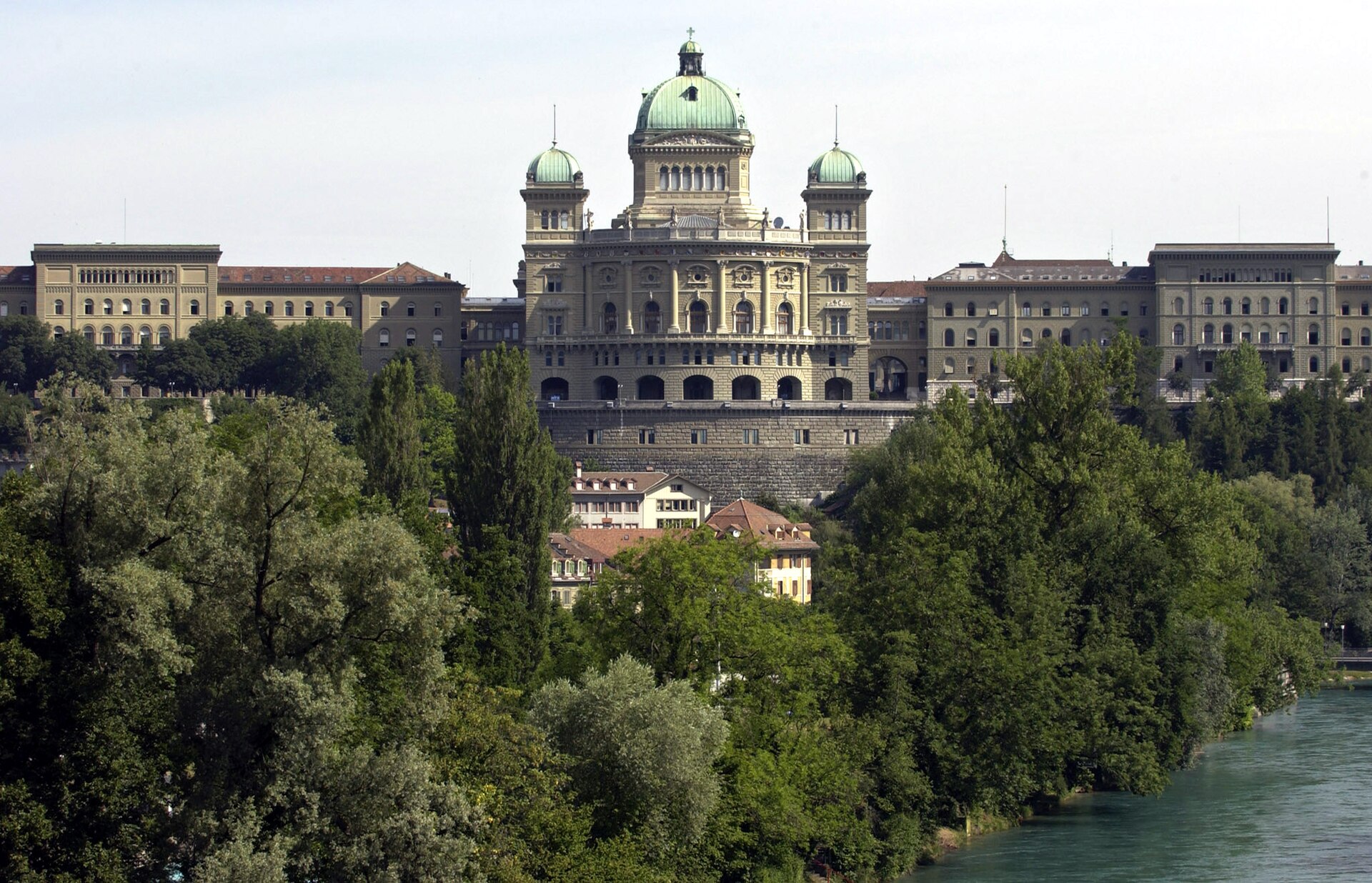
Switzerland may be the most extreme counterexample. Most people cannot name several Swiss presidents, because the country was almost deliberately designed to avoid producing a great leader. Seven people make up the Federal Council, and the presidency rotates every year. Yet this country without long-term strongman rule has sustained extremely high income, industrial competitiveness, research, finance, manufacturing, and public governance.
One qualification is essential: these are all mature countries. You cannot transplant their governing structures unchanged into the management of a vast, poor China with weak infrastructure in 1949 and assume they would work equally well.
National development may therefore have two stages.
The catch-up stage resembles a startup. It needs vision, forceful execution, concentrated resources, rapid decisions, the ability to break vested interests, and long-term strategy. Leaders such as Lee Kuan Yew, Park Chung Hee, and Deng Xiaoping can play an enormous role at this stage.
The Philippines’ problem today may not be that the CEO has too much power, but that no CEO can genuinely reorganize the company. The term is limited, the board consists of different families, each division has its own boss, major projects are blocked at every turn, and the land is fragmented among countless private owners. Ask this CEO to rebuild Manila Inc. into Shenzhen Inc., and he may not even be able to clear the first road.
Once the country enters a mature stage, however, the objective changes. You no longer need tenfold growth in a decade. You need three things: do not kill the company; improve a little every year; and occasionally, when an outstanding CEO appears, jump to the next level.
This is when the value of British-, German-, Japanese-, and Swiss-style institutions begins to emerge.
Truly powerful institutions may not eliminate the need for great people. Instead, when a great person arrives, they allow that person to create enormous additional value; when a mediocre person arrives, the company keeps operating; when a bad person arrives, they limit the damage; and after a mistake, they still allow that person to be replaced.
In other words, institutions primarily raise the floor. They do not guarantee the ceiling.
Institutions matter most when they raise the floor
Switzerland appears in the dialogue as an example of a mature system that can remain stable without depending on a long-ruling strong leader.
I especially like those three lines.
Do not kill the company.
Improve a little every year.
Occasionally, when an outstanding CEO appears, jump to the next level.
That feels much more realistic than ‘build an institution that remains great forever.’
I agree. Those three lines compress everything we have been discussing for so long.
No institution can solve the basic fact of talent distribution: great leaders are inherently rare.
What a mature institution can truly optimize is the floor, not a guaranteed ceiling.
The worst kind of system can soar if it gets Lee Kuan Yew, but makes the entire country suffer if it gets a leader like Mao in his later years.
A better system keeps improving slowly under a mediocre person; prevents a bad person from tearing down the load-bearing walls; and, when someone genuinely exceptional arrives, does not bind that person so tightly that nothing can be accomplished.
This also changes how we should evaluate Xi. The real question may not simply be whether centralization is good or bad. We should ask whether the upside created by the additional decision-making and execution capacity exceeds the tail risk produced by the system’s reduced tolerance for error.
That question may not be answerable until the entire governing cycle has ended, especially after the transfer of power is complete.